Review of 'The Man in the High Castle' on 'Storygraph'
3 estrellas
My first ever read for a book club! The Southsea meetup book club. I found it a bit boring, but interesting.
253 páginas
Idioma English
Publicado el 31 de enero de 1974 por Berkley.
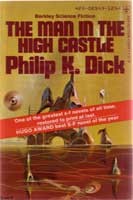
The Man in the High Castle is an alternate history novel by American writer Philip K. Dick. Published and set in 1962, the novel takes place fifteen years after a different end to World War II, and depicts intrigues between the victorious Axis Powers—primarily, Imperial Japan and Nazi Germany—as they rule over the Southern and Western United States. The Man in the High Castle won the Hugo Award for Best Novel in 1963. Reported inspirations include Ward Moore's alternate Civil War history, Bring the Jubilee (1953), classic World War II histories and the I Ching (referred to in the novel). There is a "novel within the novel", an alternate history within the alternate history where the Allies defeat the Axis (though in a manner distinct from the real-life events of the war). In 2015, the book was adapted as a multi-season TV series, with Dick's daughter, Isa Dick Hackett, as …
The Man in the High Castle is an alternate history novel by American writer Philip K. Dick. Published and set in 1962, the novel takes place fifteen years after a different end to World War II, and depicts intrigues between the victorious Axis Powers—primarily, Imperial Japan and Nazi Germany—as they rule over the Southern and Western United States. The Man in the High Castle won the Hugo Award for Best Novel in 1963. Reported inspirations include Ward Moore's alternate Civil War history, Bring the Jubilee (1953), classic World War II histories and the I Ching (referred to in the novel). There is a "novel within the novel", an alternate history within the alternate history where the Allies defeat the Axis (though in a manner distinct from the real-life events of the war). In 2015, the book was adapted as a multi-season TV series, with Dick's daughter, Isa Dick Hackett, as a producer.
My first ever read for a book club! The Southsea meetup book club. I found it a bit boring, but interesting.
I read this book because I'd seen a couple of episodes of the TV series. Honestly, as usual, the book is better. They took a lot of liberties with the series (only way to stretch a relatively short book that long,) and the characters are sometimes quite different.
This is classic Phillip K. Dick. Dystopian alternative future. It's very conceptual, rather than character-driven, although a couple of the characters are better developed than the rest. Worth a read, for sure.
I read this book because I'd seen a couple of episodes of the TV series. Honestly, as usual, the book is better. They took a lot of liberties with the series (only way to stretch a relatively short book that long,) and the characters are sometimes quite different.
This is classic Phillip K. Dick. Dystopian alternative future. It's very conceptual, rather than character-driven, although a couple of the characters are better developed than the rest. Worth a read, for sure.
Lots of effort is made to set up a very believable world in which the Axis powers defeated the Allies and split America into three. We follow the main characters through events that lead them to various conclusions. As tension heightens the narrative centres on a book, a work of fiction in which the Axis powers were defeated by the Allies and Britain and America divide the world between them, and how difficult it would be to live in that world. There are various twists along the way as the story of each character reaches a conclusion. The final twist though is left until the last few pages, and then we are left hanging.
No explanation of how it could be. Was it a figment of the characters imagination, a dream, or was it really true, and if so how could it be that the world was as the book …
Lots of effort is made to set up a very believable world in which the Axis powers defeated the Allies and split America into three. We follow the main characters through events that lead them to various conclusions. As tension heightens the narrative centres on a book, a work of fiction in which the Axis powers were defeated by the Allies and Britain and America divide the world between them, and how difficult it would be to live in that world. There are various twists along the way as the story of each character reaches a conclusion. The final twist though is left until the last few pages, and then we are left hanging.
No explanation of how it could be. Was it a figment of the characters imagination, a dream, or was it really true, and if so how could it be that the world was as the book has described it.
A fascinating world becomes real in the reading, but the end lets it down
or did I miss something?