
Epic
5 estrellas
( em português: sol2070.in/2026/02/a-time-for-everything-karl-ove-knausgaard/ )
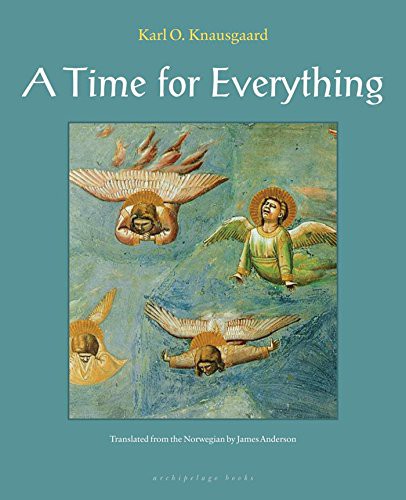
I had always wanted to read a novel like A Time For Everything (2009, 528 pgs), by the Norwegian Karl Ove Knausgaard, which retells biblical stories, reimagining the central divine myth.
The cosmological epic unfolds from a fictitious 16th-century book, On the Nature of Angels, in which the Italian Antinous Bellori defends the idea that the divine dimension of God and his angels would not be static, immobile, frozen. Like everything else, it too would undergo change. He arrives at this idea after a sinister encounter with angels very different from what had been imagined.
The narrator, meanwhile, is in the late 1990s, analyzing the mysterious life and work of Bellori and retelling some biblical episodes according to this new vision, such as the expulsion from the Garden of Eden, the destruction of Sodom and Gomorrah, the prophecies of Ezekiel, and …
( em português: sol2070.in/2026/02/a-time-for-everything-karl-ove-knausgaard/ )
I had always wanted to read a novel like A Time For Everything (2009, 528 pgs), by the Norwegian Karl Ove Knausgaard, which retells biblical stories, reimagining the central divine myth.
The cosmological epic unfolds from a fictitious 16th-century book, On the Nature of Angels, in which the Italian Antinous Bellori defends the idea that the divine dimension of God and his angels would not be static, immobile, frozen. Like everything else, it too would undergo change. He arrives at this idea after a sinister encounter with angels very different from what had been imagined.
The narrator, meanwhile, is in the late 1990s, analyzing the mysterious life and work of Bellori and retelling some biblical episodes according to this new vision, such as the expulsion from the Garden of Eden, the destruction of Sodom and Gomorrah, the prophecies of Ezekiel, and the crucifixion.
Two stories occupy most of the book: that of Cain and Abel, and the flood.
Another reimagining is that the antediluvian societies are already advanced, though agrarian, in a Scandinavian setting. Cain, the first murderer, is very different from the biblical villain. His relationship with the troubled Abel was one of the most moving fraternal stories I have experienced.
As with the flood, tragedy hangs in the air, since we already know how the stories end. The characters are so vivid, so magnetic, that I found myself hoping for an alternative, less tragic ending.
Noah is portrayed as a traumatized albino outsider, and the story of the ark focuses on his sister Anna. It is heartbreaking to know in advance that she and the extended family will be left behind.
These two long chapters are almost like novellas within the novel, so solid and complete are the stories.
By comparison, the journey of the prophet Ezekiel is brief, but it is where God and his wrathful cherubim appear most. I did not know it, but those white, chubby, mischievous little children with small wings are late cherubim. The originals are monstrous, covered in flames, with multiple limbs and heads, equine feet, and eyes all over their bodies.
God’s tyrannies are so petty in this episode that the science fiction quality of this great religious myth stands out clearly.
The speculative fiction author Orson Scott Card used to say that, if we disregarded the fact that many people treat the Bible as real history, it is itself like an epic science fiction story; and among the best, of delirious, fantastic cosmology. About an all-powerful alien entity, creator of worlds like Earth, yet petty, arrogant, confused.
I read these alternative biblical stories in that way, completely hypnotized by this grand and cruel literature about the origin of life and humanity.
But there is more. The story of the theologian Bellori does not end with his great treatise on the beings closest to the creating divinity, the angels. The book ends up banned and its author is judged by inquisitors. Disillusioned, he feels that pieces are missing from the puzzle he has assembled and sets out on another journey, arriving at a radical secret theology.
I comment further below so as not to spoil it.
Soon, Knausgaard will be among the writers I have read the most, now that I have begun his acclaimed six-book autofiction series My Struggle.