Too real for comfort.
I’m just 20% in and the events going on in this story describe the realities of today, even the months in 2025 are about right, too close for comfort. Scary…
Idioma English
Publicado el 7 de marzo de 1993
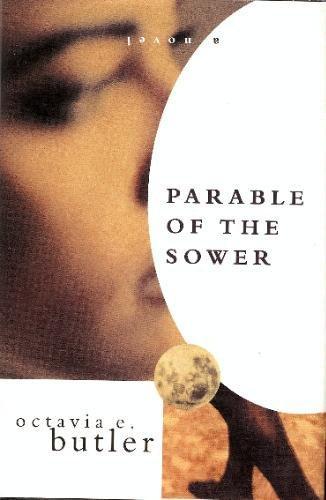
Parable of the Sower is a 1993 speculative fiction novel by American writer Octavia E. Butler. It is a post-apocalyptic fiction novel that provides commentary on climate change and social inequality. The novel follows Lauren Olamina, a young woman who can feel the pain of others and becomes displaced from her home. Several characters from various walks of life join her on her journey north and learn of a religion she has discovered and titled Earthseed. In this religion, the destiny for believers is to inhabit other planets, alongside working with the change that the earth is undergoing to survive with the reoccurring message of “God is Change”, referring to the Earth as a god. Parable of the Sower was the winner of multiple awards, including the 1994 New York Times Notable Book of the Year, and has been adapted into a concert and a graphic novel. Parable of the …
Parable of the Sower is a 1993 speculative fiction novel by American writer Octavia E. Butler. It is a post-apocalyptic fiction novel that provides commentary on climate change and social inequality. The novel follows Lauren Olamina, a young woman who can feel the pain of others and becomes displaced from her home. Several characters from various walks of life join her on her journey north and learn of a religion she has discovered and titled Earthseed. In this religion, the destiny for believers is to inhabit other planets, alongside working with the change that the earth is undergoing to survive with the reoccurring message of “God is Change”, referring to the Earth as a god. Parable of the Sower was the winner of multiple awards, including the 1994 New York Times Notable Book of the Year, and has been adapted into a concert and a graphic novel. Parable of the Sower has influenced music and essays on social justice as well as climate change. In 2021, it was picked by readers of the New York Times as the top science fiction nomination for the best book of the last 125 years.Parable of the Sower is the first in an unfinished series of novels, followed by Parable of the Talents in 1998.
I’m just 20% in and the events going on in this story describe the realities of today, even the months in 2025 are about right, too close for comfort. Scary…
(original, com reprodução de entrevista → sol2070.in/2024/09/livro-parabola-do-semeador-entrevista-octavia-butler/ )
"A Parábola do Semeador" ("Parable of The Sower", 1993) talvez seja o livro mais admirado da estadunidense Octavia Butler. Além dos prêmios que recebeu há 30 anos, voltou a ser muito lido recentemente por ser, além de um ótimo romance, um dos mais vívidos retratos da catástrofe climática — boa parte da história se passa entre 2024 e 2027.
Apesar de não ser leitura fácil, está entre as melhores distopias que já li. O horror dos primeiros anos de um colapso social total devido à emergência climática e ao sistema econômico é chocante a ponto de precisar baixar o livro e respirar de tempos em tempos. Ouvi gente dizendo que não suportou e largou.
É uma predição assustadoramente plausível do que pode acontecer, incluindo até a volta da escravização — a culminação da atual piora constante das condições de …
(original, com reprodução de entrevista → sol2070.in/2024/09/livro-parabola-do-semeador-entrevista-octavia-butler/ )
"A Parábola do Semeador" ("Parable of The Sower", 1993) talvez seja o livro mais admirado da estadunidense Octavia Butler. Além dos prêmios que recebeu há 30 anos, voltou a ser muito lido recentemente por ser, além de um ótimo romance, um dos mais vívidos retratos da catástrofe climática — boa parte da história se passa entre 2024 e 2027.
Apesar de não ser leitura fácil, está entre as melhores distopias que já li. O horror dos primeiros anos de um colapso social total devido à emergência climática e ao sistema econômico é chocante a ponto de precisar baixar o livro e respirar de tempos em tempos. Ouvi gente dizendo que não suportou e largou.
É uma predição assustadoramente plausível do que pode acontecer, incluindo até a volta da escravização — a culminação da atual piora constante das condições de trabalho apontaria para onde?
Li nesses dias uma resenha sobre outro livro — "Alerta Vermelho", de Marha Wells (está na minha lista) — em que o autor reclama do cenário de capitalismo distópico como sendo um lugar-comum pouco criativo. Ele parece preferir cenários otimistas, que ajudam a imaginar futuros mais plenos. Já eu gosto de histórias de distopias catastróficas justamente porque abrem os olhos para o presente — sem isso, não teremos a menor chance. O desconforto, ou até angústia, fazem parte. Parece-me um negacionismo sutil querer evitar o desagradável. Além disso, essas histórias retratam como as pessoas lidam com a situação. Acabam sendo bem práticas para o momento atual.
Entretanto, acho sim certa falta de imaginação aquele cenário comum em que, sem governo e polícia, as pessoas passam apenas a predar umas às outras. Isso não falta em A Parábola do Semeador. Mas como é um tempo de transição, em que os valores da civilização sendo destruída ainda não foram substituídos, faz sentido.
Na história, acompanhamos Lauren, uma adolescente com hiperempatia, a capacidade (fictícia) de sentir involuntariamente em seu corpo a dor e prazer de seres próximos. Após a comunidade murada onde vive ser destruída, ela precisa enfrentar a estrada. Ao buscar sentido, seus questionamentos acabam dando forma a uma nova filosofia-religião, em que “Deus = mudança”, ou seja, o único princípio universal é a constante transformação. Por questão de sobrevivência, pessoas vão se reunindo em torno dela, e a compaixão da comunidade que vai se formando acaba sendo uma tocante utopia dentro da distopia.
Octavia Butler disse que escreveu essa história como se fosse a autobiografia (a narração é feita em um diário, que parece reproduzir até os erros de grafia que existiriam em um original do tipo) da fundadora da religião que se disseminou pelo mundo devastado.
"A Parábola do Semeador" é o primeiro volume de uma série interrompida pela morte da autora, em 2006, após o segundo volume, "A Parábola dos Talentos". Entretanto, a história vale por si só, independentemente dos volumes que não chegaram a ser escritos.
Me resulta difícil concretar per què m'ha fascinat tant. La pobresa, la desesperació i la mort regnen en un futur massa proper (en anys i en versemblança), però sempre hi ha un bri d'esperança.
Per molt que diguin de les segones parts, no puc esperar a llegir Parable of the Talents!
Me resulta difícil concretar per què m'ha fascinat tant. La pobresa, la desesperació i la mort regnen en un futur massa proper (en anys i en versemblança), però sempre hi ha un bri d'esperança.
Per molt que diguin de les segones parts, no puc esperar a llegir Parable of the Talents!
Which feels like a cheesy thing to say in a review about dystopian fiction, but I genuinely didn't realize this book was published in the year 1993 until I read Butler's biography at the back and realized she passed away in 2006. It feels... pertinent
Others have said this is a pretty grim novel. I agree. It hurt to read, quite often. I feel like I've mostly moved out of my dystopian fiction era but this one hooked me a lot harder than most I've read. I haven't finished a book this quickly in quite a while.
I think Parable of the Sower has a lot to say about eco-fatalism, as well as the many "fatalisms" of neoliberalism in general, which it delivers on very well. I also felt like it would have a lot to say about the value of religion, divorced from the way people in …
Which feels like a cheesy thing to say in a review about dystopian fiction, but I genuinely didn't realize this book was published in the year 1993 until I read Butler's biography at the back and realized she passed away in 2006. It feels... pertinent
Others have said this is a pretty grim novel. I agree. It hurt to read, quite often. I feel like I've mostly moved out of my dystopian fiction era but this one hooked me a lot harder than most I've read. I haven't finished a book this quickly in quite a while.
I think Parable of the Sower has a lot to say about eco-fatalism, as well as the many "fatalisms" of neoliberalism in general, which it delivers on very well. I also felt like it would have a lot to say about the value of religion, divorced from the way people in my life and I suspect many others in the west tend to equate religion with Christianity. It delivered on the former part, but not so much the latter in my opinion. Still very compelling, and very well written nonetheless.
Cuando estaba más joven la ficción y la ciencia ficción eran espacios que me hacían sentido para conectar con la imaginación y con la posibilidad de pensar y sentir la vida fuera de límites que percibía en mis presentes.
Como estos ámbitos de la literatura no resonaban tanto en algunas de mis redes cercanas, me alejé un poquito de éstos por algunos años y me metí a libros más teóricos y "serios". Pero desde que empecé a leer a Octavia Butler volví a interesarme por textos de (ciencia) ficción.
Octavia reflexionó sobre la ausencia/invisibilización de mujeres negras en un contexto donde predominaba una ciencia ficción de escritores hombres y blancos. También propuso escenarios que abordaran los pasados-presentes-futuros y que estimularan la imaginación y la creatividad como posibilidades ante las crisis que seguimos viviendo.
En Parable of the sower, Octavia tejió temas como: sensibilidad hacia otrxs seres; críticas …
Cuando estaba más joven la ficción y la ciencia ficción eran espacios que me hacían sentido para conectar con la imaginación y con la posibilidad de pensar y sentir la vida fuera de límites que percibía en mis presentes.
Como estos ámbitos de la literatura no resonaban tanto en algunas de mis redes cercanas, me alejé un poquito de éstos por algunos años y me metí a libros más teóricos y "serios". Pero desde que empecé a leer a Octavia Butler volví a interesarme por textos de (ciencia) ficción.
Octavia reflexionó sobre la ausencia/invisibilización de mujeres negras en un contexto donde predominaba una ciencia ficción de escritores hombres y blancos. También propuso escenarios que abordaran los pasados-presentes-futuros y que estimularan la imaginación y la creatividad como posibilidades ante las crisis que seguimos viviendo.
En Parable of the sower, Octavia tejió temas como: sensibilidad hacia otrxs seres; críticas al capitalismo, a las desigualdades socio-económicas, a la explotación y hacia la crisis climática; formas de construir relaciones y comunidades basadas en el reconocimiento mutuo; cercanías y comprensiones diversas con la tierra y la sostenibilidad de la vida (entre muchas otras cosillas).
Algo que me parece muy curioso, es la manera en que Octavia toma aspectos del libro, que como lectora me estuvieron haciendo cierto ruido de forma muy sutil, y los hace evidentes en la secuela (Parable of the talents). Creo que no es sencillo plantear todo un imaginario y luego construir una narrativa que lo replantee o que muestre sus matices, al menos de forma convincente. Por eso, aunque Parable of the sower es un libro que aprecié haber leído, verlo de la mano con Parable of the talents fue aún más apreciable para mí.
I did not feel invested in any of the characters, but I did find them, their stories, and the setting very interesting. In that way I feel conflicted about this book. Another thing is that I was always expecting things to get worse in the next chapter, as the protagonist realizes early on, so I was anxious about continuing before I would read each time. But because I didn't feel invested in the characters, as shocking as the events were I wasn't too bothered by them.
I did not feel invested in any of the characters, but I did find them, their stories, and the setting very interesting. In that way I feel conflicted about this book. Another thing is that I was always expecting things to get worse in the next chapter, as the protagonist realizes early on, so I was anxious about continuing before I would read each time. But because I didn't feel invested in the characters, as shocking as the events were I wasn't too bothered by them.
On a second read, I feel a lot differently than I did the first time around. I can't separate uncomfortable feelings of reading about a teenager basically starting a cult and attracting people who are at their absolute most vulnerable to join. It doesn't sit well with me to read about Lauren's glee to "raise babies in Earthseed." And the intense, intense, dehumanization and otherizing of people using drugs, making them into physically unrecognizable monsters, is something I can't get past. If Lauren has hyper-empathy, and is more sensitive to people in need of help, then why does the buck stop with people using drugs?
On a second read, I feel a lot differently than I did the first time around. I can't separate uncomfortable feelings of reading about a teenager basically starting a cult and attracting people who are at their absolute most vulnerable to join. It doesn't sit well with me to read about Lauren's glee to "raise babies in Earthseed." And the intense, intense, dehumanization and otherizing of people using drugs, making them into physically unrecognizable monsters, is something I can't get past. If Lauren has hyper-empathy, and is more sensitive to people in need of help, then why does the buck stop with people using drugs?